
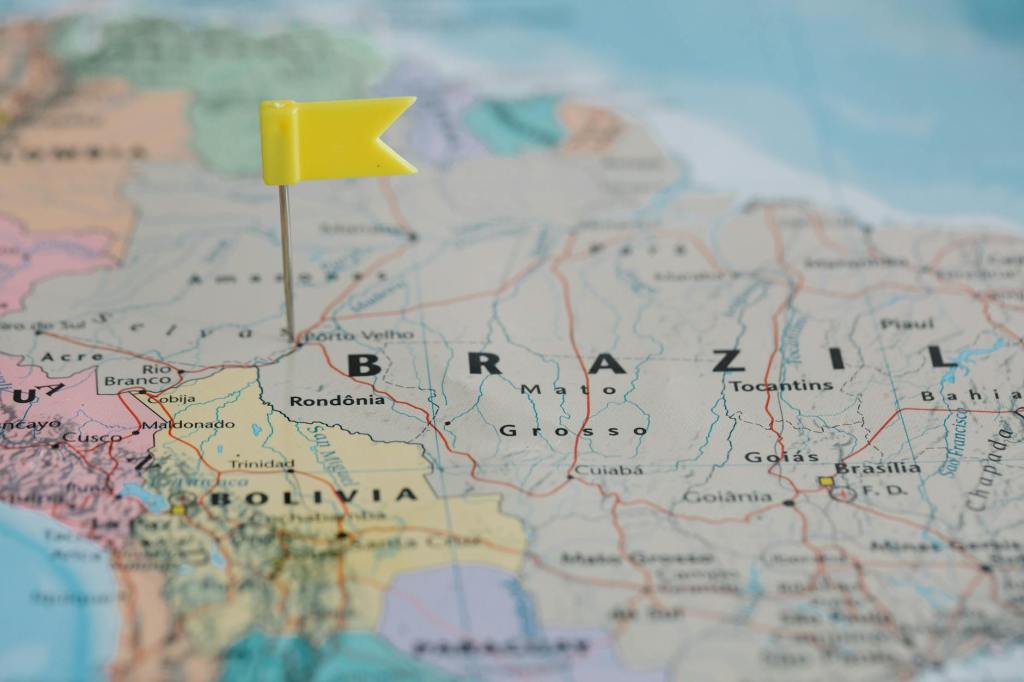
Back in 2018, Helton Levy published a paper about counter-mapping initiatives in Brazil.
Counter-mapping has emerged over the last decades as an encompassing term to define the efforts that marginalised communities make to re-map or re-classify the territories they live according to other perspectives of power.
Whether when they call these territories by other names, point demographic, class or race divides in areas, or reclaim the indigeneity of territories, these practices are called counter-mapping.
I leave a link to the article below as research continues on new dimensions of counter-mapping.
Disrupting the old periphery: Alternative media, inequality and counter-mapping in Brazil
Abstract
The periphery used to be where precarious dwellings predominate: a way of ‘behaviour’ of the poor, their social class, or an aspect at one’s appearance. Semi-structured interviews conducted with alternative media producers based across the country have produced insights into many attempts to change a derogatory sense of the periphery through counter-mapping initiatives. Producers have geotagged their presence at the city’s centre, contested the neutrality of maps, and appropriated surveillance images in semi-public spaces. While not an exhaustive exercise, this paper sees counter-mapping used to explore four distinct communicative strategies around the ethnic/racial divide, the cultural divide, the discourse of mobility, and the raising of awareness about emerging intersectional issues.
Download it here https://www.westminsterpapers.org/article/266/galley/3790/download/
To cite it
Levy, H. (2018). Disrupting the old periphery: Alternative media, inequality and counter-mapping in Brazil. Westminster Papers in Communication and Culture, 13(2).

