
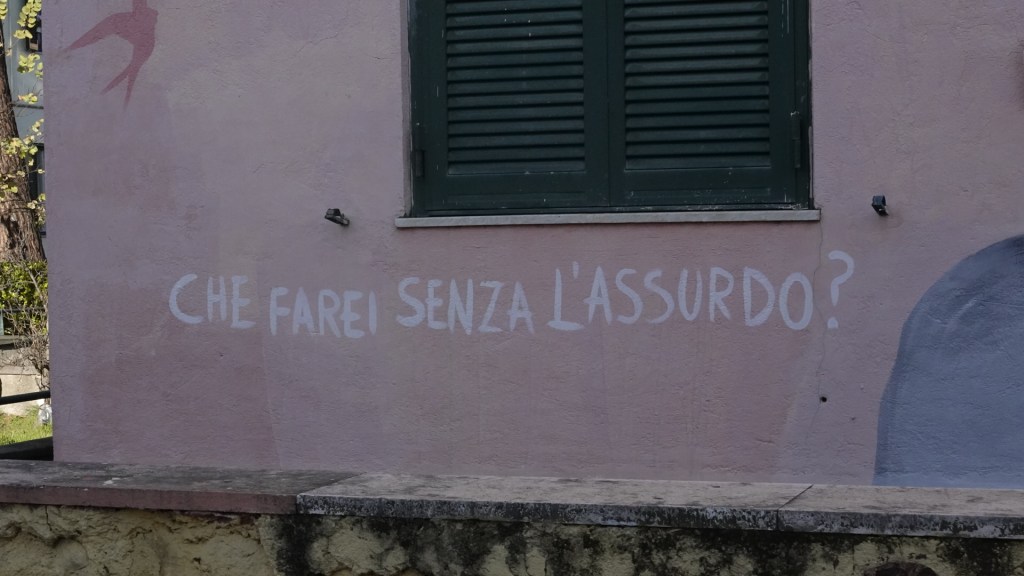
Helton Levy and Eleonora Diamanti finished working on a chapter for the upcoming volume Living Rome: Space, Identity, and the Politics of Belonging (Lever Press, 2026), edited by Isabella Clough Marinaro and Will Haynes.
In this study, Levy & Diamanti continue their ongoing research on the intersections of graffiti practice in Rome. This time, they discuss the moral geographies of graffiti acceptance by the public opinion in the Italian capital. They review the fact that graffiti in the city has been historically perceived as not only legal and illegal, but also as controversial.
This discussion follows a survey of five recent graffiti and street artists who have been active in the city and beyond, focusing on their “pro-inclusion” agendas, which include discussing topics such as gender, immigration, and world affairs in their compositions.
In its conclusion, the article argues that contemporary street artists in Rome no longer consider graffiti in Rome to be an illegal or controversial practice, as they adopt digital ways to enhance and expand Rome’s wall limits into a globalised world.
Below are some pictures taken during the field research in the Trullo neighbourhood and in the Corviale, a sprawling residential complex nicknamed the Serpentone (or Big Serpent). The pictures intend to capture a recent regeneration work based on this new generation of street artists, who have dialogued with the location and its architecture by paying homage to Roman icons.
The full article with the analysis of these images is expected to be published in early 2026.


